
Technology systems are designed to communicate problems through diagnostic messages, but many users find these messages confusing rather than helpful. Among these, grs uine28.6 error codes have become a frequent topic of discussion for administrators, technicians, and everyday users attempting to identify system faults quickly and accurately.
Understanding grs uine28.6 error codes goes far beyond memorizing a list of numbers. Each code represents a specific condition, helping users locate hardware faults, software conflicts, communication failures, or configuration issues. This guide explains how these codes work, what commonly triggers them, how to troubleshoot them efficiently, and how to prevent recurring problems through proactive maintenance.
What Are GRS UINE28.6 Error Codes?
The term grs uine28.6 error codes refers to diagnostic identifiers generated when a system detects abnormal operating conditions. Rather than describing the entire issue, each code acts as a reference point that directs technicians toward the affected component, service, or process.
These diagnostic codes are designed to reduce troubleshooting time by narrowing the scope of investigation. Instead of testing every subsystem individually, users can focus on the area indicated by the reported error while considering environmental conditions, recent updates, and configuration changes.
Why GRS UINE28.6 Error Codes Appear
Several factors can trigger grs uine28.6 error codes, including corrupted software files, interrupted communication between system components, firmware inconsistencies, incompatible updates, or temporary resource shortages. Environmental factors such as unstable power delivery or unreliable network connectivity may also contribute.
In many situations, multiple underlying issues combine to produce a single diagnostic message. For example, a failed software update may corrupt configuration files while simultaneously interrupting communication with dependent services, making careful analysis essential before implementing repairs.
Common Types of GRS UINE28.6 Error Codes
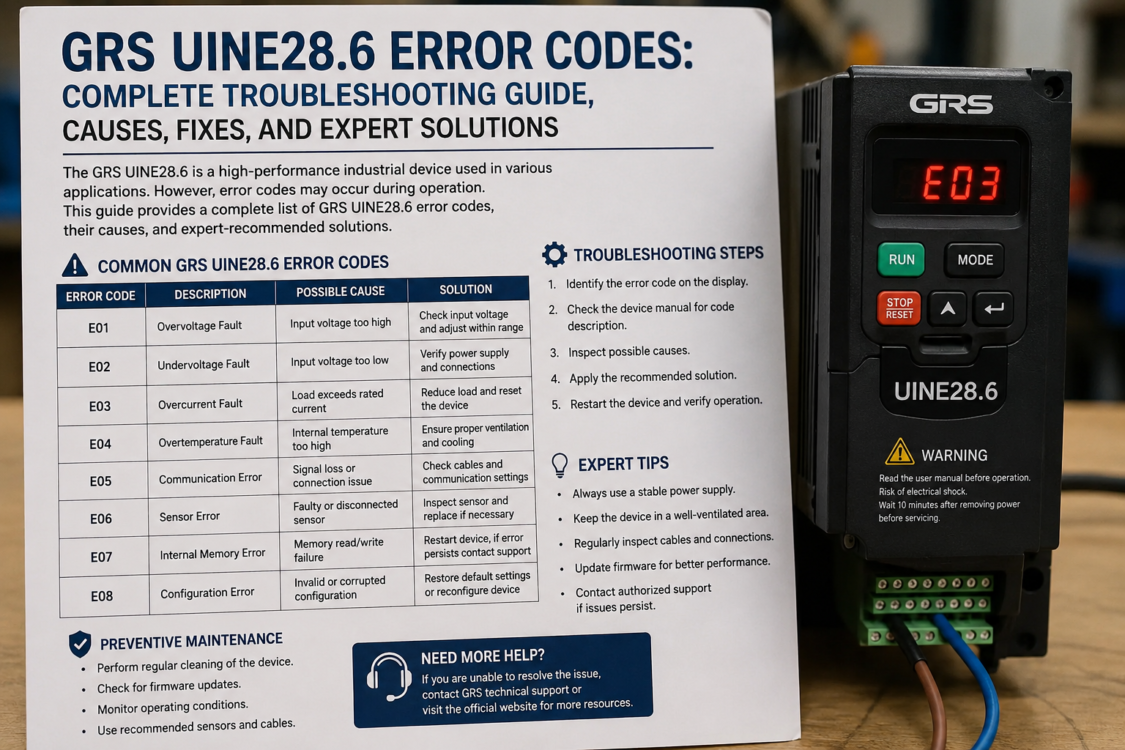
Although implementations vary between systems, most grs uine28.6 error codes fall into recognizable categories. Some indicate communication failures, while others relate to authentication, configuration validation, storage integrity, firmware synchronization, hardware detection, or permission conflicts.
The following table summarizes common categories and their typical troubleshooting priorities.
| Error Category | Typical Cause | Common Symptoms | Recommended Response |
|---|---|---|---|
| Communication | Network interruption | Connection failures | Verify network stability |
| Configuration | Incorrect settings | Startup errors | Review configuration files |
| Storage | Corrupted data | Read/write failures | Check storage integrity |
| Authentication | Invalid credentials | Access denied | Verify authentication settings |
| Firmware | Version mismatch | Device instability | Update compatible firmware |
| Hardware | Component malfunction | Unexpected shutdowns | Inspect hardware connections |
| Software | Corrupted installation | Application crashes | Reinstall affected software |
| Resource | Memory or CPU exhaustion | Performance degradation | Optimize resource allocation |
Understanding these categories enables users to prioritize investigations logically instead of relying on trial-and-error troubleshooting methods.
How to Diagnose GRS UINE28.6 Error Codes Effectively
Effective diagnosis begins with collecting contextual information rather than reacting immediately to the displayed message. Record when grs uine28.6 error codes appeared, what operations were occurring beforehand, and whether any updates, hardware replacements, or configuration changes had recently taken place.
Next, review diagnostic logs alongside system events to identify recurring patterns. Comparing timestamps, monitoring resource utilization, and verifying service dependencies often reveals root causes that would remain hidden if only the visible error message were considered.
Step-by-Step Troubleshooting Process
A structured troubleshooting process minimizes unnecessary downtime and prevents introducing additional problems. Begin by restarting affected services, verifying physical connections, confirming configuration integrity, and checking whether software versions remain compatible across interconnected components.
If the issue persists, isolate individual variables one at a time. Testing hardware separately, restoring previous configurations, validating permissions, and reinstalling damaged software components can gradually eliminate possible causes until the source of the grs uine28.6 error codes becomes clear.
Common Mistakes During Troubleshooting
One frequent mistake is assuming that the displayed diagnostic code directly identifies the failed component. In reality, grs uine28.6 error codes often indicate where the failure becomes visible rather than where it actually originates.
Another common error involves making several system changes simultaneously. Altering multiple settings before testing each adjustment makes it difficult to determine which modification resolved—or worsened—the underlying issue.
Preventing Future GRS UINE28.6 Error Codes
Preventive maintenance significantly reduces the likelihood of recurring grs uine28.6 error codes. Regular software updates, verified backups, hardware inspections, log monitoring, configuration documentation, and proactive performance analysis help maintain system stability over time.
Organizations should also establish standardized change management procedures. Testing updates in controlled environments before deployment minimizes compatibility problems while ensuring that rollback plans remain available if unexpected issues emerge.
Best Practices for Long-Term System Reliability
Long-term reliability depends on consistency rather than occasional repairs. Monitoring storage health, maintaining firmware compatibility, validating security policies, and documenting infrastructure changes provide valuable historical information when diagnosing future incidents involving grs uine28.6 error codes.
Automation also improves operational resilience. Scheduled health checks, predictive monitoring, and alerting systems enable administrators to detect abnormal conditions before they escalate into visible failures or prolonged service interruptions.
Practical Example of Resolving GRS UINE28.6 Error Codes
Imagine a business application that suddenly stops communicating with its database after a scheduled software update. Administrators observe grs uine28.6 error codes during startup, while users report failed login attempts and delayed responses across multiple services.
Log analysis reveals that the update introduced incompatible configuration parameters while leaving database credentials unchanged. Restoring the previous configuration, applying the correct compatibility patch, and validating service dependencies resolves the issue without requiring hardware replacement or complete system reinstallation.
Industry Perspective on Diagnostic Error Codes
Modern enterprise environments increasingly rely on structured diagnostics because infrastructures have become more interconnected and complex. Diagnostic frameworks improve operational efficiency by allowing support teams to categorize incidents consistently and reduce mean time to resolution.
As management expert W. Edwards Deming famously observed, “Without data, you’re just another person with an opinion.” Diagnostic information, including grs uine28.6 error codes, transforms troubleshooting from guesswork into an evidence-based process that supports faster and more reliable decision-making.
Conclusion
Understanding grs uine28.6 error codes requires more than recognizing a numerical identifier. Successful troubleshooting combines careful observation, systematic testing, log analysis, configuration validation, and preventive maintenance to uncover the true source of system failures.
Whether you manage enterprise infrastructure or maintain a smaller technical environment, treating diagnostic codes as valuable investigative tools rather than isolated problems leads to faster resolutions, improved reliability, and fewer recurring disruptions. A disciplined troubleshooting strategy ultimately saves time, reduces operational costs, and strengthens long-term system performance.
FAQ
What are grs uine28.6 error codes?
grs uine28.6 error codes are diagnostic identifiers that indicate specific system issues such as communication failures, configuration errors, software conflicts, hardware problems, or resource limitations.
Can grs uine28.6 error codes indicate hardware failure?
Yes. Some grs uine28.6 error codes point toward failing hardware components, loose connections, or incompatible firmware, although additional diagnostics are usually necessary to confirm the exact cause.
How should I troubleshoot grs uine28.6 error codes?
Start by reviewing logs, checking recent system changes, validating configurations, confirming hardware connections, testing software compatibility, and isolating individual components before making major modifications.
Can software updates trigger grs uine28.6 error codes?
Yes. Incompatible updates, interrupted installations, corrupted files, or version mismatches frequently contribute to grs uine28.6 error codes, especially in interconnected environments.
How can I prevent grs uine28.6 error codes from recurring?
Regular maintenance, proactive monitoring, verified backups, controlled software deployments, documentation, and periodic hardware inspections greatly reduce the likelihood of recurring grs uine28.6 error codes.
Read More: Hookers in the Valley: Legal Status, Safety Risks, Search Intent, and What You Should Know