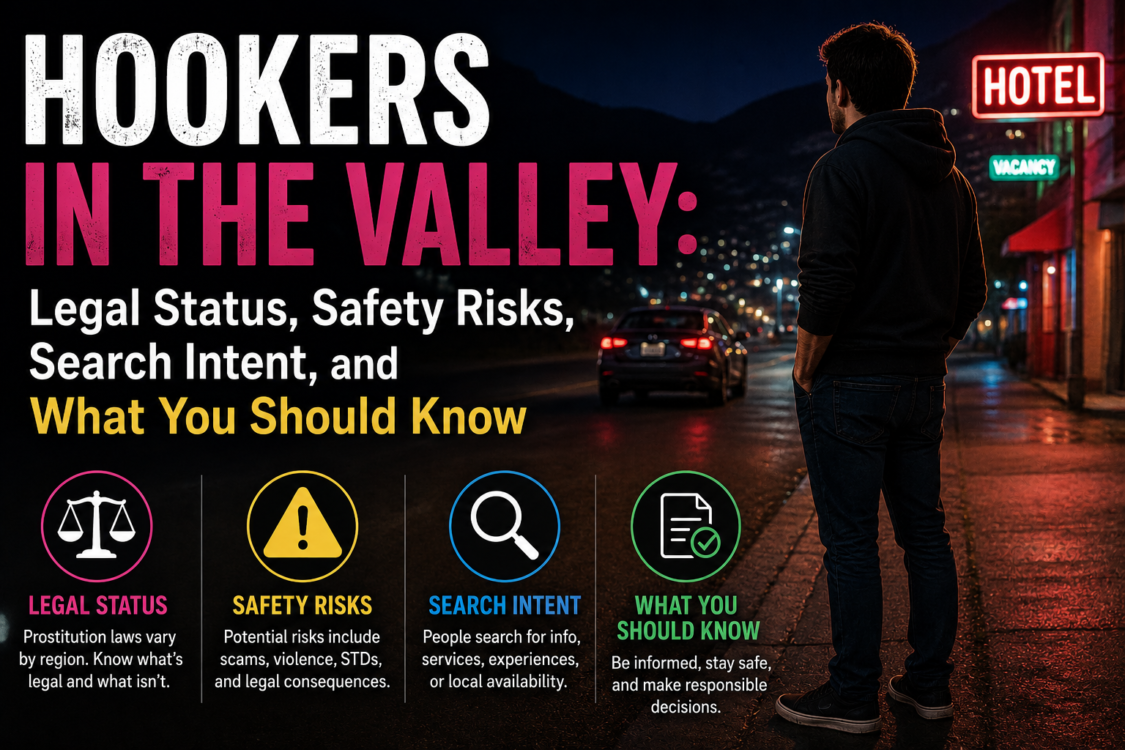

People searching for hookers in the valley often have different intentions. Some are trying to understand local laws, others are researching online listings, while many simply want to know what the phrase refers to. Understanding the context behind this search helps separate myths from facts and promotes safer, better-informed decisions.
This guide explores the legal landscape, common online patterns, safety considerations, and frequently misunderstood aspects of the topic. Rather than promoting illegal activity, it provides practical, evidence-based information that helps readers navigate the subject responsibly.
Understanding the Search Intent Behind Hookers in the Valley
The phrase hookers in the valley has become a common search query because users often look for local information, online discussions, or legal guidance. Search engines recognize that this keyword can represent informational, navigational, or curiosity-driven intent rather than a single purpose.
Many people searching this phrase are actually seeking answers about legality, scams, neighborhood safety, or how online classified advertising has evolved. Understanding these different motivations helps explain why search results vary widely across locations and jurisdictions.
Legal Considerations
The legal status associated with hookers in the valley depends entirely on the country, state, province, or municipality. Laws governing prostitution, solicitation, brothels, and related activities differ significantly around the world, making local legislation the most reliable source of guidance.
Ignoring local regulations can result in criminal charges, financial penalties, or other legal consequences. Before relying on information found online, individuals should verify applicable laws through official government resources rather than anonymous websites or social media discussions.
Safety Risks and Personal Security
Searches for hookers in the valley frequently lead to websites, advertisements, or messaging platforms that may not be trustworthy. Fraudulent listings, fake profiles, phishing attempts, identity theft, and financial scams remain common across many online marketplaces.
Personal safety extends beyond financial risks. Meeting unknown individuals, sharing sensitive personal information, or transferring money before verifying legitimacy can expose users to significant danger. Exercising caution online is always the safest approach.
How Online Listings Have Changed
Years ago, classified advertising websites played a larger role in connecting local service providers with potential customers. Increased regulation, platform moderation, and law enforcement efforts have changed how these listings appear online.
Today, searches involving hookers in the valley often produce forums, news articles, legal resources, or scam reports instead of direct listings. This shift reflects broader efforts by technology companies and regulators to reduce illegal and exploitative activity.
Common Misconceptions
One misconception is that every search for hookers in the valley reflects an intention to purchase services. In reality, journalists, researchers, students, residents, and travelers may all search the phrase for entirely different reasons.
Another misunderstanding is that online advertisements automatically represent legitimate or verified individuals. Many listings are duplicated, outdated, misleading, or created specifically to deceive users, making critical evaluation essential.
Search Trends and User Behavior
Search interest surrounding hookers in the valley tends to increase during holidays, major events, tourism seasons, and weekends. Search engines also recognize related phrases, semantic variations, and location-based modifiers when interpreting user intent.
Modern SEO emphasizes topical relevance rather than repeating keywords excessively. Comprehensive content that explains legal, social, and safety aspects generally performs better than pages focused solely on transactional language.
Public Safety and Scam Awareness
Public safety organizations regularly encourage internet users to remain skeptical of anonymous advertisements that request advance payments or unusual communication methods. These warning signs appear across numerous forms of online fraud.
Anyone researching hookers in the valley should recognize common scam indicators, including requests for cryptocurrency, prepaid gift cards, unverifiable identities, pressure tactics, or inconsistent communication. Awareness is one of the most effective forms of protection.
Responsible Alternatives
People seeking companionship or social interaction often have many legal alternatives available. Community events, social clubs, dating platforms, and professional matchmaking services provide opportunities to meet others within established legal frameworks.
Focusing on lawful and transparent options reduces risk while supporting healthier interactions. Responsible choices also help avoid legal uncertainty and minimize exposure to fraudulent schemes that frequently appear online.
Comparison of Common Search Outcomes
| Search Outcome | Typical User Intent | Potential Risk | Reliability | Recommended Approach |
|---|---|---|---|---|
| News articles | Understanding local events | Low | High | Read multiple reputable sources |
| Government resources | Legal information | Very low | Very high | Verify current local laws |
| Discussion forums | Community opinions | Medium | Variable | Treat opinions cautiously |
| Anonymous advertisements | Commercial promotion | High | Low | Exercise extreme caution |
| Scam reports | Consumer protection | Low | High | Learn common warning signs |
| Academic research | Social analysis | Very low | High | Use for balanced context |
Why Reliable Information Matters
Accurate information helps people distinguish between sensationalized content and factual reporting. Because topics involving hookers in the valley often generate misinformation, relying on authoritative sources improves decision-making.
Well-researched information also supports better public awareness. Understanding the legal framework, recognizing scams, and appreciating broader social issues create a more informed perspective than relying solely on anecdotal online claims.
Expert Perspective
As media scholar Marshall McLuhan famously observed, “The medium is the message.” The platforms through which information is shared significantly influence how audiences interpret it.
That observation remains relevant today because online search results, social media, and anonymous advertising all shape public perception. Evaluating both the information and its source is essential when researching sensitive topics like hookers in the valley.
Conclusion
Searches for hookers in the valley reflect a wide range of intentions, from legal research and public safety concerns to general curiosity about online trends. Understanding the context behind the keyword helps readers interpret search results more accurately and avoid misinformation.
Rather than relying on anonymous listings or unverified claims, prioritize official legal resources, trusted news organizations, and reputable educational sources. An informed approach promotes better decisions, greater personal safety, and a clearer understanding of this frequently misunderstood topic.
FAQ
What does “hookers in the valley” usually mean?
The phrase hookers in the valley is generally used as a location-based search query referring to commercial sex services, although many searches are actually seeking legal information, news, or public safety guidance.
Is searching for hookers in the valley illegal?
Searching for hookers in the valley is generally not illegal, but the legality of related activities depends on the laws of the specific jurisdiction.
Why do search results vary so much?
Search engines interpret hookers in the valley differently depending on location, user intent, local regulations, and available authoritative content, which is why results often differ.
How can I identify scam websites?
Look for warning signs such as requests for advance payments, unverifiable identities, poor website quality, pressure tactics, and a lack of transparent contact information.
Where can I find accurate legal information?
The most reliable information comes from official government websites, local law enforcement resources, and reputable legal organizations that explain applicable laws in your area.
Read More: FundFireInsight.com: The Complete Guide to Smarter Financial Intelligence