
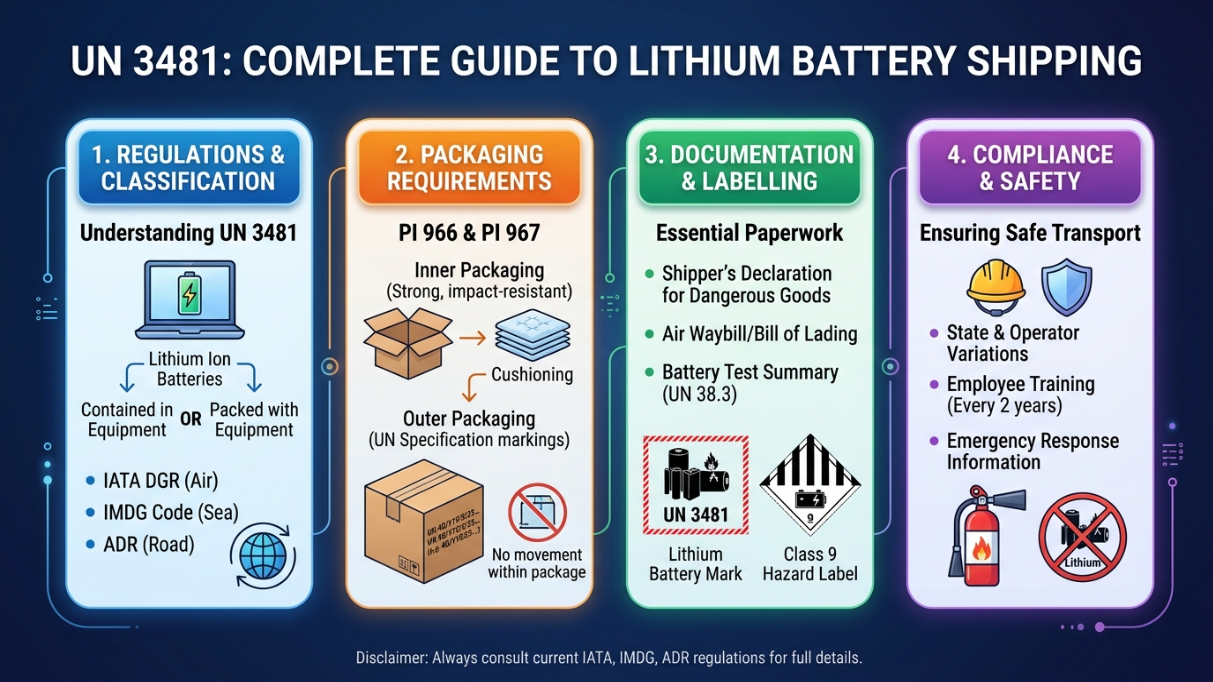

Lithium batteries power nearly every modern electronic device, from smartphones and laptops to medical equipment and industrial tools. As global shipments continue to grow, understanding UN 3481 has become essential for manufacturers, distributors, logistics providers, and e-commerce businesses. Proper compliance not only protects people and cargo but also prevents costly shipping delays, rejected consignments, and regulatory penalties.
This comprehensive guide explains what UN 3481 means, how it differs from other lithium battery classifications, applicable transport regulations, packaging standards, documentation requirements, and best practices for maintaining compliance across international supply chains.
What Is UN 3481?
UN 3481 is the United Nations shipping identification number assigned to lithium-ion batteries that are either contained in equipment or packed with equipment. This classification helps carriers, customs authorities, and emergency responders quickly identify the shipment and apply the correct handling procedures throughout transportation.
Unlike standalone lithium-ion batteries, products shipped under this classification include devices such as laptops, power tools, medical equipment, barcode scanners, cameras, tablets, and numerous industrial electronics. Although the batteries are installed inside or packaged alongside the equipment, they still present transportation risks that require specific regulatory controls.
Why UN Numbers Matter in Dangerous Goods Transport
The United Nations developed standardized identification numbers to create consistency in the global transportation of hazardous materials. Every dangerous good receives a unique identification number that simplifies communication across countries, carriers, and regulatory agencies regardless of language differences.
For logistics professionals, these numbers provide immediate information about applicable packaging instructions, hazard communication, documentation requirements, emergency response procedures, and transport limitations. Using the correct classification minimizes confusion while improving both safety and operational efficiency.
Understanding the Difference Between UN 3481 and UN 3480
One of the most common misconceptions involves confusing UN 3481 with UN 3480. While both classifications involve lithium-ion batteries, they apply to entirely different shipping scenarios that require different packaging and transport requirements.
The distinction is straightforward. UN 3480 applies to lithium-ion batteries shipped by themselves without equipment, whereas UN 3481 applies when batteries are packed with equipment or already installed inside equipment. This seemingly small difference significantly affects packaging instructions, labeling requirements, and airline acceptance policies.
| Classification | Battery Configuration | Typical Products | Transport Complexity | Common Examples |
|---|---|---|---|---|
| UN 3480 | Batteries shipped alone | Replacement batteries | Highest | Battery packs, spare laptop batteries |
| UN 3481 | Batteries contained in equipment | Electronics | Moderate | Laptops, tablets, medical devices |
| UN 3481 | Batteries packed with equipment | Products with separate battery | Moderate | Power tools with battery included |
Products Commonly Shipped Under UN 3481
Many consumer and commercial products fall under UN 3481 because the lithium-ion battery remains installed within the device during shipment. Everyday examples include smartphones, tablets, wireless speakers, smartwatches, portable medical monitors, handheld scanners, drones, digital cameras, and electric measuring instruments.
Industrial applications are equally common. Warehousing equipment, surveying instruments, robotics systems, portable diagnostic devices, security systems, and professional photography equipment frequently travel under this classification. As battery-powered technology expands across industries, the relevance of this designation continues to grow.
International Regulations Governing UN 3481
Several international organizations regulate the transportation of lithium batteries to ensure consistent safety standards. Depending on the shipping method, different regulatory frameworks may apply, making compliance a multi-layered responsibility.
Air transport generally follows the International Air Transport Association (IATA) Dangerous Goods Regulations alongside International Civil Aviation Organization standards. Ocean freight relies on the International Maritime Dangerous Goods Code, while road and rail transport often follow ADR, RID, or domestic hazardous materials regulations. Businesses moving products globally should understand how these frameworks interact rather than relying on a single rulebook.
Packaging Requirements for Safe Transportation
Proper packaging is one of the most important aspects of shipping UN 3481 products safely. Packaging must protect batteries from physical damage, accidental activation, vibration, crushing, and short circuits that could trigger thermal events during transportation.
Outer packaging should be durable enough to withstand normal transportation conditions while securely holding both the equipment and battery in place. When batteries are packed with equipment rather than installed inside it, additional protection is necessary to prevent movement and accidental contact with conductive materials.
Labeling and Marking Requirements
Hazard communication is essential for everyone involved in the logistics chain. Packages containing UN 3481 shipments often require lithium battery marks that clearly indicate the presence of lithium-ion batteries and provide emergency contact information when applicable.
The exact labeling requirements vary depending on battery size, quantity, shipment configuration, transport mode, and applicable regulatory exceptions. Businesses should always verify current carrier requirements because individual airlines and logistics providers may impose stricter acceptance standards than the baseline regulations.
Documentation and Shipping Papers
Accurate shipping documentation reduces customs delays and demonstrates regulatory compliance. While documentation requirements differ depending on transport mode and shipment size, accurate descriptions remain essential across every logistics operation.
Supporting documents may include dangerous goods declarations, commercial invoices, packing lists, shipper certifications, and carrier-specific documentation. Maintaining organized records also simplifies audits, improves traceability, and strengthens overall compliance management.
Common Compliance Mistakes to Avoid
Many shipping delays result not from defective products but from preventable compliance errors. Businesses frequently underestimate the importance of proper battery classification, package testing, documentation accuracy, or employee training.
Another common mistake involves assuming every lithium battery shipment follows identical rules. Battery chemistry, watt-hour rating, installation status, transport method, destination country, and carrier policies all influence compliance obligations, making careful shipment assessment essential before dispatch.
Safety Considerations Throughout the Supply Chain
Safety extends far beyond packaging. Warehousing, inventory management, transportation, loading procedures, and emergency preparedness all contribute to reducing operational risk when handling lithium batteries.
Organizations should establish clear inspection routines for damaged equipment, swollen batteries, or compromised packaging before products enter the shipping process. Employee awareness programs combined with documented handling procedures significantly reduce incidents across the supply chain.
“Safety is never an accident; it is the result of consistent attention to detail, informed decisions, and disciplined execution.”
The Growing Importance of Lithium Battery Regulations
Global demand for rechargeable electronics, electric mobility, renewable energy storage, and connected devices continues to accelerate. As battery shipments increase, regulators regularly update standards to address emerging technologies and evolving transportation risks.
Businesses that proactively monitor regulatory developments gain a competitive advantage by avoiding shipment interruptions and maintaining customer confidence. Rather than viewing compliance as an administrative burden, successful organizations integrate it into broader quality management and operational excellence initiatives.
Best Practices for Businesses Shipping UN 3481
Companies that consistently achieve regulatory compliance typically implement standardized shipping procedures supported by regular employee training and internal quality reviews. These practices reduce human error while creating repeatable workflows that scale as shipment volumes grow.
Technology also plays an increasingly valuable role. Digital documentation systems, automated compliance checks, packaging verification processes, and shipment management software help organizations maintain accuracy while improving operational efficiency across international logistics networks.
Conclusion
Understanding UN 3481 is essential for anyone involved in manufacturing, distributing, importing, exporting, or transporting lithium-ion battery-powered equipment. Proper classification, compliant packaging, accurate documentation, and adherence to international transport regulations protect people, cargo, and business operations alike.
As global commerce becomes increasingly dependent on rechargeable technologies, organizations that prioritize education and regulatory compliance will experience fewer shipping disruptions, stronger customer trust, and more resilient supply chains. Whether shipping consumer electronics or specialized industrial equipment, mastering UN 3481 requirements is a critical investment in long-term operational success.
FAQ
What does UN 3481 mean?
UN 3481 identifies lithium-ion batteries that are either contained in equipment or packed with equipment for transportation under international dangerous goods regulations.
Is UN 3481 considered dangerous goods?
Yes. Although many shipments qualify for specific regulatory exceptions, UN 3481 is classified as dangerous goods because lithium-ion batteries present fire and thermal runaway risks if improperly handled.
What products are typically shipped under UN 3481?
Common examples include laptops, smartphones, tablets, cameras, medical devices, drones, portable industrial equipment, barcode scanners, and power tools with lithium-ion batteries installed or packaged alongside the equipment.
Does UN 3481 require special packaging?
Yes. Packaging for UN 3481 shipments must prevent battery damage, accidental activation, movement during transport, and short circuits while complying with applicable international transport regulations.
Which transport regulations apply to UN 3481?
Air shipments generally follow IATA Dangerous Goods Regulations, while sea transport follows the IMDG Code. Road and rail shipments comply with regional hazardous materials regulations applicable to the countries involved.
Can UN 3481 shipments travel by air?
Yes. Many UN 3481 shipments may be transported by air when they satisfy airline acceptance criteria, packaging requirements, labeling standards, documentation rules, and applicable watt-hour limitations.
Why is proper compliance with UN 3481 important?
Proper compliance minimizes safety risks, prevents shipment delays, reduces regulatory penalties, improves carrier acceptance, protects employees, and supports efficient international logistics operations.
Read More: Calendar for Miami Dade Public Schools: Complete Guide to the School Year