
Transporting biological materials demands precision, regulatory awareness, and proper labeling. Among the most recognized shipping identifiers in the medical, laboratory, pharmaceutical, and research industries is the un3373 label, which communicates that a shipment contains Biological Substance, Category B. Although the label appears simple, its correct application is essential for safety, legal compliance, and uninterrupted transportation.
Whether you’re shipping diagnostic specimens, laboratory samples, veterinary materials, or clinical research specimens, understanding how the un3373 label works can prevent delays, regulatory penalties, and damaged shipments. This guide explains every important aspect—from regulations and packaging standards to practical shipping advice and frequently misunderstood requirements—helping organizations ship biological materials with confidence and consistency.
What Is a UN3373 Label?
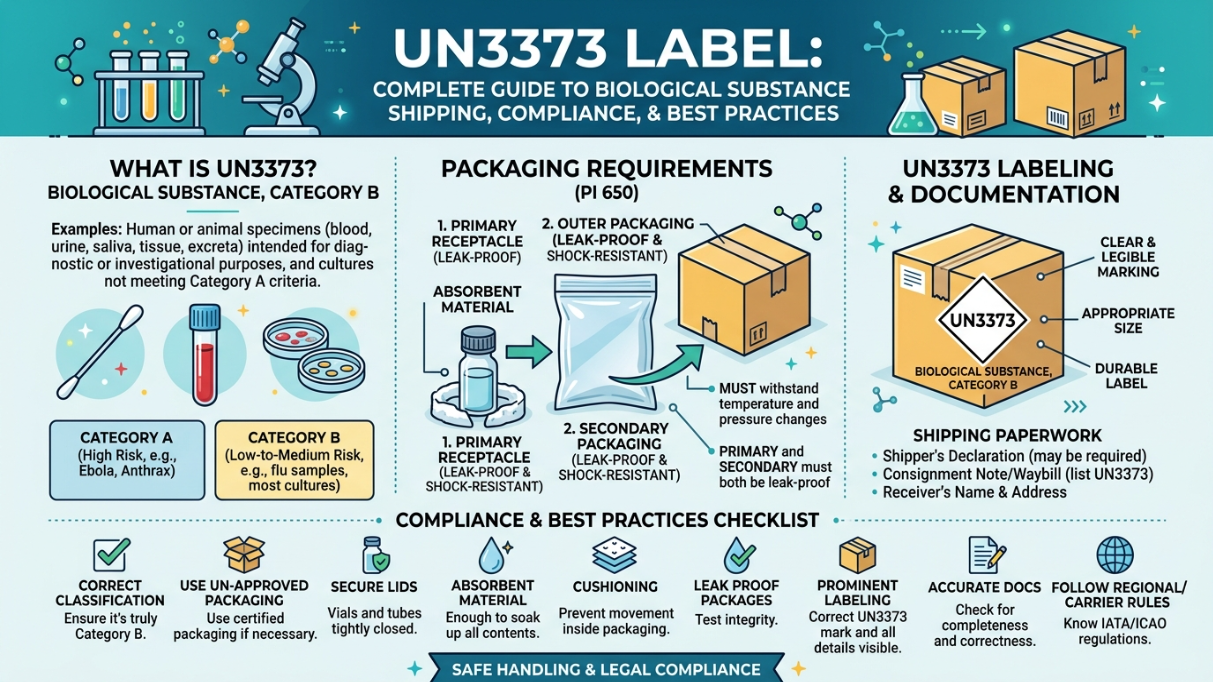
The un3373 label identifies packages containing Biological Substance, Category B, as defined by international dangerous goods transportation regulations. These materials may contain pathogens but are not generally capable of causing permanent disability, life-threatening illness, or fatal disease when exposure occurs under normal transportation conditions.
Unlike hazardous materials requiring extensive dangerous goods documentation, Category B biological substances follow a specific regulatory framework that balances safety with practical transportation. The diamond-shaped marking instantly alerts carriers, logistics personnel, customs officials, and laboratory staff that the shipment requires handling according to established biological transport standards.
Why the UN3373 Label Matters
Every shipment carrying biological specimens travels through multiple handling points before reaching its destination. The un3373 label creates a universally recognized visual standard that improves communication between laboratories, healthcare providers, courier services, airlines, and regulatory authorities regardless of language or location.
Beyond regulatory compliance, proper labeling protects sample integrity. Accurate identification helps ensure appropriate handling practices, minimizes shipping interruptions, reduces inspection delays, and lowers the likelihood of rejected shipments. For organizations processing hundreds or thousands of samples daily, consistent labeling directly supports operational efficiency.
Regulatory Standards Behind the UN3373 Label
The requirements governing the un3373 label originate from internationally harmonized dangerous goods regulations. These include the UN Model Regulations, the International Air Transport Association (IATA) Dangerous Goods Regulations, the International Civil Aviation Organization (ICAO) Technical Instructions, and applicable national transportation rules.
Although regional requirements may vary slightly, the core principles remain remarkably consistent worldwide. Organizations should regularly review current regulations because transportation standards evolve to address emerging pathogens, new packaging technologies, and improvements in global biosafety practices.
Materials That Require a UN3373 Label
Not every biological sample requires the un3373 label, making proper classification one of the most important responsibilities before shipment. Typical examples include diagnostic specimens, blood samples, urine specimens, tissue samples, swab collections, microbiological cultures that meet Category B criteria, veterinary diagnostic materials, and research specimens.
Classification depends on professional assessment rather than assumptions about sample type alone. Clinical information, patient history, laboratory findings, and the known characteristics of the suspected infectious agent all contribute to determining whether Category B classification is appropriate.
Packaging Requirements for Category B Shipments
The un3373 label is only one component of compliant shipping. Biological Substance, Category B shipments must follow the triple packaging system designed to prevent leakage while protecting the contents throughout transportation.
The packaging consists of a leakproof primary receptacle, a leakproof secondary package, absorbent material sufficient to contain the contents if leakage occurs, and a rigid outer package meeting minimum performance standards. Together, these components provide layered protection against impact, vibration, pressure changes, and accidental mishandling.
Components of a Compliant Shipment
A compliant shipment involves much more than placing the un3373 label on the outer package. Supporting information, orientation requirements where applicable, sender and recipient addresses, emergency contact details when required, and carrier-specific documentation all contribute to regulatory compliance.
Organizations should establish standardized shipping procedures supported by documented quality management systems. Internal audits, packaging verification, and employee competency assessments significantly reduce the risk of non-compliant shipments reaching carriers.
Common Mistakes to Avoid
Many shipping errors occur because organizations underestimate the importance of correct packaging rather than misunderstanding the un3373 label itself. Improper package dimensions, damaged outer packaging, missing absorbent material, incomplete documentation, and poorly secured specimen containers remain among the most common compliance failures.
Another frequent mistake involves assuming every biological sample qualifies for Category B. Some materials require different classifications depending on their infectious potential, while others may not fall under dangerous goods regulations at all. Proper risk assessment should always precede labeling decisions.
UN3373 Label vs Other Biological Shipping Classifications
Understanding where the un3373 label fits within biological transport regulations helps organizations avoid costly classification errors. Different biological materials carry different regulatory obligations based on the level of risk they present during transportation.
| Classification | Typical Contents | Risk Level | Label Requirement | Packaging Complexity |
|---|---|---|---|---|
| UN3373 Biological Substance, Category B | Diagnostic specimens, routine patient samples | Moderate | UN3373 diamond marking | Triple packaging |
| Category A Infectious Substance | Highly infectious pathogens | High | Infectious substance label with UN2814 or UN2900 | Advanced certified packaging |
| Exempt Human Specimen | Very low likelihood of pathogens | Low | Exempt specimen identification where applicable | Protective packaging |
| Non-Regulated Biological Material | Certain research materials without infectious risk | Minimal | No UN3373 marking | Standard protective packaging |
Correct classification protects public health while preventing unnecessary regulatory burdens. When uncertainty exists, organizations should consult trained dangerous goods professionals before shipping biological materials.
Best Practices for Applying the UN3373 Label
The un3373 label should remain clearly visible on the outer package without obstruction from tape, additional labels, or shipping documents. It should be printed with sharp edges, durable ink, and sufficient contrast so it remains legible throughout transport.
Consistent labeling procedures improve operational reliability. Many laboratories integrate barcode verification, packaging checklists, employee training, and final shipment inspections into their workflow to ensure every outgoing package meets regulatory expectations before collection by the carrier.
Choosing High-Quality Labels
Not all labels perform equally under transportation conditions. Temperature fluctuations, moisture exposure, abrasion, and handling can quickly degrade poor-quality labels, potentially leading to compliance concerns or delayed deliveries.
Organizations should choose professionally manufactured labels designed specifically for laboratory, healthcare, and logistics environments. Durable adhesives, weather-resistant printing, and compliance with applicable size and visibility requirements contribute to safer, more reliable transportation.
Training and Compliance Culture
Even the highest-quality un3373 label cannot compensate for inadequate employee training. Personnel responsible for preparing biological shipments should understand classification principles, packaging requirements, documentation procedures, and applicable transportation regulations.
Regular refresher training ensures employees remain current as regulations evolve. Practical demonstrations, competency testing, and shipment audits foster a culture where compliance becomes part of daily operations rather than an occasional checklist exercise.
Industry Applications of the UN3373 Label
Healthcare systems, pathology laboratories, biotechnology companies, pharmaceutical manufacturers, universities, veterinary clinics, public health agencies, and clinical research organizations all rely on the un3373 label to support safe specimen transportation.
As decentralized healthcare expands and diagnostic testing continues growing worldwide, the volume of Category B shipments increases each year. Efficient shipping systems built around standardized labeling help laboratories deliver faster diagnostic results while maintaining regulatory compliance across increasingly complex supply chains.
Technology Is Improving Biological Shipping
Digital logistics platforms are changing how organizations manage biological specimen transportation. Barcode tracking, electronic shipment verification, smart packaging sensors, and automated compliance software reduce manual errors while improving shipment visibility from origin to destination.
These innovations complement rather than replace the un3373 label. Physical package identification remains essential because transportation personnel require immediate visual recognition even when digital systems are unavailable or operating across different logistics networks.
Building a Reliable Shipping Process
An effective biological shipping program combines standardized procedures, employee expertise, quality packaging materials, and continuous improvement. Organizations that document each step—from specimen collection through delivery confirmation—consistently experience fewer shipment disruptions and higher customer confidence.
As the transportation of medical and research specimens becomes increasingly global, investing in reliable packaging systems and correct un3373 label usage becomes a strategic advantage. Strong compliance practices protect valuable specimens, strengthen organizational reputation, and support uninterrupted scientific and healthcare operations.
“Compliance is most effective when it becomes part of everyday operational culture rather than a final inspection before shipment.”
Conclusion
The un3373 label represents far more than a simple shipping mark. It serves as an internationally recognized indicator that biological materials have been properly classified, packaged, and prepared for transportation according to established safety standards. Correct application protects laboratory personnel, transportation workers, healthcare providers, and the public while ensuring valuable biological specimens reach their destination safely.
Organizations that prioritize employee training, maintain high-quality packaging standards, and regularly review transportation regulations create stronger compliance programs and more dependable shipping operations. Whether shipping a single diagnostic specimen or managing thousands of laboratory samples every week, understanding and correctly using the un3373 label remains an essential component of modern biological logistics.
FAQ
What is a UN3373 label?
A un3373 label identifies packages containing Biological Substance, Category B, and informs carriers that the shipment must be transported according to applicable biological material regulations.
Who needs to use a UN3373 label?
Laboratories, hospitals, diagnostic centers, research institutions, veterinary facilities, pharmaceutical companies, and healthcare organizations shipping qualifying Category B biological substances typically require the un3373 label.
Does every biological specimen require a UN3373 label?
No. Only biological materials classified as Biological Substance, Category B require the un3373 label. Other specimens may be exempt, non-regulated, or classified under different dangerous goods categories.
Can I print my own UN3373 label?
Yes, provided the un3373 label meets all applicable regulatory requirements for design, dimensions, durability, and visibility throughout transportation.
Is the UN3373 label enough for compliance?
No. The un3373 label must be used alongside proper classification, compliant triple packaging, required documentation, and trained personnel to ensure shipments fully satisfy transportation regulations.
How often do UN3373 shipping regulations change?
Regulatory authorities periodically update transportation requirements. Organizations using the un3373 label should review current regulations regularly and provide ongoing employee training to remain compliant.
Read More: UN 3481: Complete Guide to Lithium Battery Shipping, Regulations, Packaging, and Compliance