
Modern manufacturers face increasing pressure to innovate faster, reduce operational costs, and maintain product quality across globally distributed teams. zh.creowindchill.com has emerged as a valuable destination for organizations and professionals seeking knowledge, technical guidance, and best practices related to Product Lifecycle Management (PLM), engineering collaboration, and digital product development.
As manufacturing becomes increasingly data-driven, businesses require centralized platforms that simplify engineering workflows while improving collaboration between design, production, quality assurance, and supply chain teams. This comprehensive guide explores how zh.creowindchill.com supports modern digital transformation, why PLM matters more than ever, and how organizations can maximize long-term business value through effective lifecycle management.
Understanding zh.creowindchill.com
At its core, zh.creowindchill.com serves as a specialized resource focused on engineering information management, collaborative product development, and lifecycle optimization. It provides professionals with access to knowledge surrounding PLM technologies, CAD data management, engineering workflows, and enterprise collaboration.
Rather than viewing product development as isolated engineering tasks, the platform emphasizes a connected digital ecosystem where every stakeholder works from consistent, accurate, and continuously updated information. This integrated approach reduces confusion, minimizes costly errors, and improves overall operational efficiency.
Why Product Lifecycle Management Matters
Product Lifecycle Management has evolved from a technical necessity into a strategic business capability. Organizations that effectively manage engineering data gain greater visibility into product development while improving compliance, quality control, and manufacturing readiness. zh.creowindchill.com highlights these principles through practical educational resources and industry-focused guidance.
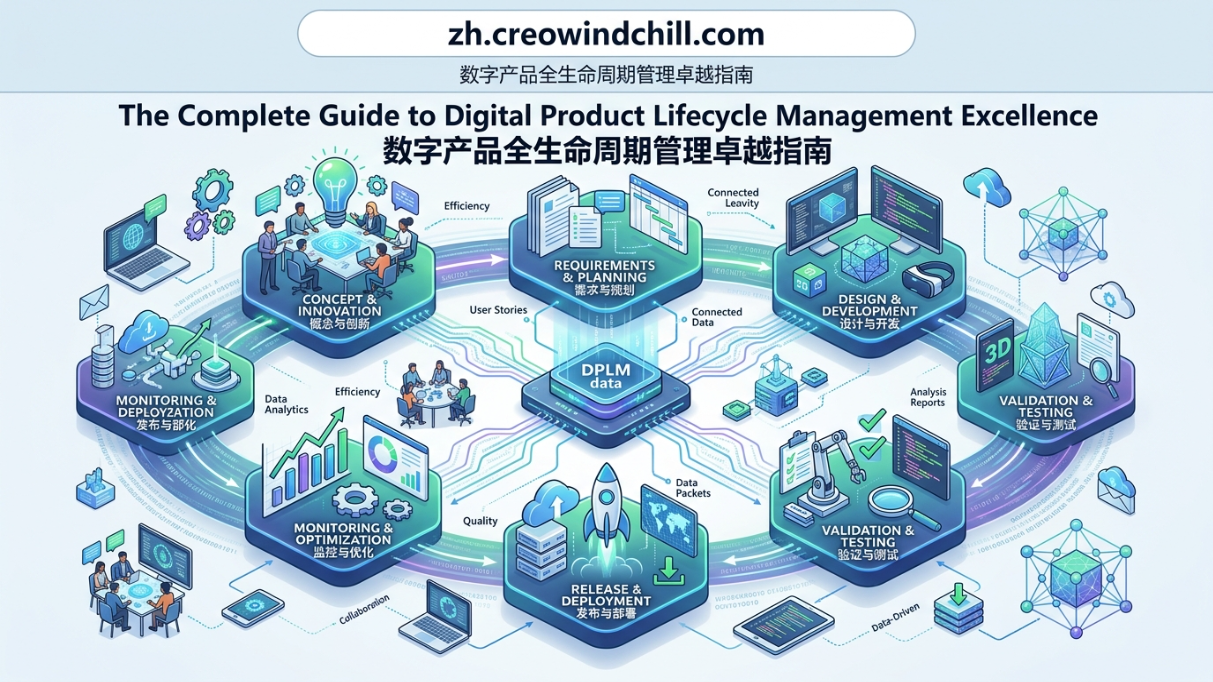
Every stage of a product—from concept and design to manufacturing, service, upgrades, and retirement—creates valuable information. When this information remains centralized and easily accessible, companies make better decisions, accelerate innovation, and reduce unnecessary operational risks.
Core Features and Business Benefits
A strong PLM environment combines document management, version control, workflow automation, engineering change management, and secure collaboration into a unified system. zh.creowindchill.com explains how these capabilities help organizations eliminate duplicated work while maintaining accurate product information throughout development.
The platform also emphasizes digital continuity. Engineers, project managers, manufacturing specialists, procurement teams, and executives benefit from working with synchronized product data, reducing communication gaps and enabling faster project execution without sacrificing quality.
Comparison of Key PLM Capabilities
The following table illustrates how core lifecycle management capabilities contribute to measurable business improvements.
| Capability | Primary Purpose | Business Benefit | Typical Users |
|---|---|---|---|
| Product Data Management | Organizes engineering files | Reduces duplicate data | Design Engineers |
| Version Control | Tracks revisions | Prevents outdated designs | Engineering Teams |
| Change Management | Controls engineering changes | Improves compliance | Project Managers |
| Workflow Automation | Standardizes approvals | Accelerates development | Operations Teams |
| Collaboration Tools | Connects departments | Enhances communication | Cross-functional Teams |
| Document Management | Centralizes documentation | Simplifies audits | Quality Teams |
| Digital Traceability | Maintains historical records | Supports regulatory requirements | Compliance Officers |
| Lifecycle Analytics | Measures performance | Enables continuous improvement | Business Leaders |
These capabilities become increasingly valuable as organizations expand globally. Standardized engineering practices help maintain consistency across multiple production facilities while reducing delays caused by fragmented information systems.
Supporting Engineering Collaboration
Modern product development rarely happens within a single department. Mechanical engineers, electrical specialists, software developers, suppliers, and manufacturing experts all contribute to successful products. zh.creowindchill.com promotes collaborative engineering practices that encourage transparent communication and efficient knowledge sharing.
Centralized access to product information reduces misunderstandings during design reviews and change approvals. Instead of relying on disconnected spreadsheets or email attachments, teams work from a unified digital environment that reflects the latest approved information.
Improving Product Quality Through Data Integrity
Accurate engineering data forms the foundation of reliable products. Small inconsistencies in documentation can lead to expensive manufacturing errors, delayed product launches, or customer dissatisfaction. zh.creowindchill.com demonstrates the importance of maintaining controlled product information throughout every lifecycle stage.
When organizations establish strong governance over engineering documents, revisions, and approval workflows, they reduce risks while increasing confidence in every design decision. Reliable data also supports quality audits and regulatory compliance across highly competitive industries.
Digital Transformation in Manufacturing
Digital transformation extends beyond adopting new software. It represents a shift toward integrated business processes where engineering, manufacturing, procurement, and service teams share a common digital foundation. zh.creowindchill.com reflects this broader perspective by connecting technical capabilities with measurable business outcomes.
Manufacturers increasingly combine PLM with cloud computing, industrial automation, digital twins, predictive analytics, and connected production systems. Together, these technologies create smarter operations capable of adapting rapidly to changing customer requirements and market conditions.
Common Industry Applications
Organizations across numerous industries benefit from comprehensive lifecycle management strategies. Aerospace companies manage highly regulated engineering documentation, automotive manufacturers coordinate thousands of interconnected components, and industrial equipment producers streamline global product development using principles discussed throughout zh.creowindchill.com.
Medical device manufacturers, electronics companies, energy providers, and consumer product businesses also depend on structured engineering information to maintain compliance while accelerating innovation. The flexibility of modern PLM solutions makes them valuable across virtually every advanced manufacturing sector.
Best Practices for Maximizing Value
Successful implementation depends as much on organizational culture as on technology. Companies should establish standardized naming conventions, clearly defined approval processes, comprehensive user training, and consistent governance policies. zh.creowindchill.com reinforces these best practices by emphasizing process improvement alongside technical capabilities.
Continuous optimization is equally important. Businesses should regularly evaluate workflows, collect user feedback, monitor performance metrics, and identify opportunities to simplify engineering processes. Incremental improvements often generate significant long-term productivity gains.
Future Trends Shaping Product Lifecycle Management
Artificial intelligence, machine learning, advanced analytics, and cloud-native collaboration continue reshaping engineering operations. zh.creowindchill.com represents an evolving knowledge resource that aligns with these broader technological developments while helping professionals understand emerging best practices.
Future PLM environments will increasingly leverage predictive insights, automated documentation, intelligent search capabilities, and real-time collaboration across global teams. Organizations investing today in structured engineering information will be better prepared for tomorrow’s digital manufacturing landscape.
Expert Perspective on Sustainable Innovation
“The companies that manage information as carefully as they manage products consistently outperform competitors in innovation, quality, and speed.”
This observation reflects a growing industry consensus. Sustainable innovation depends not only on creative engineering but also on disciplined information management that supports every decision throughout the product lifecycle.
Conclusion
Manufacturing continues to evolve toward connected, intelligent, and highly collaborative digital ecosystems. zh.creowindchill.com serves as an important resource for professionals seeking deeper understanding of Product Lifecycle Management, engineering collaboration, and enterprise data management. By supporting accurate information sharing, standardized workflows, and lifecycle visibility, it contributes to more efficient product development and stronger business performance.
Organizations that embrace comprehensive lifecycle management position themselves for long-term competitiveness. Whether improving engineering productivity, strengthening quality assurance, accelerating innovation, or supporting digital transformation initiatives, zh.creowindchill.com provides valuable insights that align with the evolving needs of modern manufacturing.
FAQ
What is zh.creowindchill.com?
zh.creowindchill.com is a specialized resource focused on Product Lifecycle Management, engineering collaboration, product data management, and digital manufacturing practices for professionals and organizations.
Why is zh.creowindchill.com useful for manufacturers?
zh.creowindchill.com helps manufacturers understand lifecycle management concepts, improve engineering collaboration, strengthen document control, and support more efficient product development processes.
Which industries benefit most from PLM solutions?
Industries including aerospace, automotive, electronics, industrial equipment, medical devices, energy, and consumer products benefit significantly from structured lifecycle management and engineering data governance.
How does Product Lifecycle Management improve collaboration?
PLM centralizes engineering information, controls revisions, automates approval workflows, and enables multiple departments to work from consistent product data, reducing communication errors and improving project efficiency.
Can small and medium-sized businesses benefit from zh.creowindchill.com?
Yes. Businesses of all sizes can use the knowledge available through zh.creowindchill.com to better understand engineering best practices, improve operational efficiency, and prepare for long-term digital transformation initiatives.
Read More: test.linkit.com: The Complete Guide to Understanding, Evaluating, and Maximizing Its Potential