
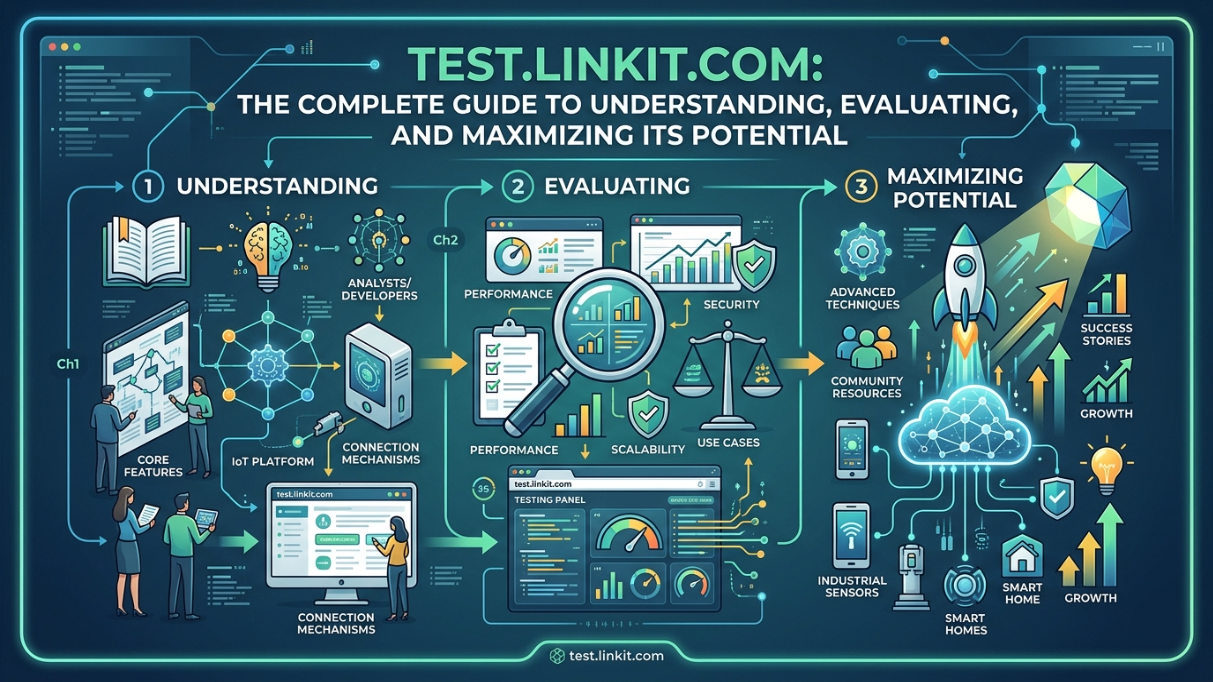

When evaluating modern digital platforms, businesses and professionals increasingly seek solutions that combine performance, reliability, and flexibility. test.linkit.com has become an important point of interest for users looking to understand how such environments can support testing, integration, collaboration, and operational efficiency.
This comprehensive guide explores test.linkit.com from multiple perspectives, including its functionality, practical applications, technical considerations, optimization strategies, and long-term value. Whether you are researching the platform for professional use or simply seeking a better understanding of its capabilities, this article provides the depth, clarity, and strategic insight needed to make informed decisions.
Understanding test.linkit.com
At its core, test.linkit.com represents a digital environment designed to support testing, validation, or controlled workflows within a broader technology ecosystem. Organizations often rely on similar environments to evaluate processes before implementing changes in production.
Rather than viewing a testing environment as merely a temporary workspace, experienced teams recognize its strategic value. It enables experimentation, quality assurance, risk reduction, and continuous improvement while protecting live systems from unnecessary disruption.
Why test.linkit.com Matters for Modern Organizations
Digital transformation depends on reliable systems that can evolve without sacrificing stability. test.linkit.com supports this objective by providing a structured environment where updates, integrations, and workflows can be assessed before broader deployment.
This approach significantly reduces operational uncertainty. Teams gain confidence through validation, stakeholders receive clearer visibility into progress, and organizations minimize the likelihood of unexpected technical issues affecting end users.
Core Features of test.linkit.com
A well-designed testing environment typically includes secure access controls, workflow validation, integration capabilities, performance evaluation, and collaborative testing. test.linkit.com reflects these characteristics by emphasizing controlled experimentation and repeatable processes.
Another strength lies in flexibility. Different departments—from development and quality assurance to project management and business operations—can participate in structured testing activities while maintaining clear documentation and accountability.
Benefits of Using test.linkit.com
The greatest advantage of test.linkit.com is its ability to reduce risk while increasing confidence. Teams can identify problems earlier in the development lifecycle, allowing issues to be corrected before they become expensive or disruptive.
Efficiency also improves because testing becomes systematic rather than reactive. Organizations spend less time resolving unexpected production issues and more time delivering valuable improvements to customers and internal stakeholders.
Common Use Cases for test.linkit.com
Development teams frequently utilize test.linkit.com to verify software updates, validate integrations, assess new features, and evaluate system performance before production deployment. These activities improve reliability while maintaining consistent quality standards.
Business users can also benefit from structured testing environments. Process improvements, workflow automation, employee training, and pilot initiatives become easier to evaluate in a controlled setting before wider organizational adoption.
Comparing Key Capabilities
Different organizations evaluate testing environments using several important criteria. The following comparison highlights essential capabilities commonly associated with test.linkit.com and their business value.
| Capability | Business Value | Practical Impact |
|---|---|---|
| Secure Testing Environment | Protects production systems | Safer experimentation |
| Workflow Validation | Reduces operational errors | Higher deployment confidence |
| Integration Testing | Ensures compatibility | Improved interoperability |
| Performance Evaluation | Detects bottlenecks | Better user experience |
| Collaboration Support | Improves communication | Faster issue resolution |
| Documentation | Enhances transparency | Easier compliance and audits |
| Change Validation | Confirms readiness | Lower deployment risk |
| Quality Assurance | Maintains consistency | Improved reliability |
A balanced evaluation should consider both technical performance and operational outcomes. Organizations that align testing capabilities with business objectives generally achieve stronger long-term results and more efficient project delivery.
Best Practices for Maximizing test.linkit.com
Successful implementation begins with clear objectives. Teams should define testing criteria, establish measurable success indicators, and document expected outcomes before initiating activities within test.linkit.com.
Consistent review processes are equally important. Regular monitoring, stakeholder feedback, and continuous refinement help organizations improve testing quality while adapting to evolving technical and business requirements.
Security and Reliability Considerations
Security should remain a priority throughout every testing process. Access permissions, authentication controls, data protection policies, and monitoring practices contribute to maintaining a secure environment within test.linkit.com.
Reliability depends on repeatable procedures and accurate documentation. Organizations that maintain consistent testing standards are better positioned to identify defects early while ensuring dependable deployment outcomes.
Performance Optimization Strategies
Optimizing test.linkit.com requires ongoing observation rather than one-time adjustments. Performance metrics, response times, workflow efficiency, and integration health should be reviewed regularly to identify opportunities for improvement.
Automation can significantly enhance productivity when implemented thoughtfully. Repetitive validation tasks become faster, human error decreases, and technical teams gain additional time for strategic development initiatives.
Industry Trends and Future Outlook
Testing environments continue to evolve alongside cloud computing, automation, artificial intelligence, and continuous delivery methodologies. test.linkit.com fits within this broader trend by supporting iterative improvement and agile operational practices.
Organizations increasingly recognize that testing is not simply a technical requirement but a strategic capability. As digital ecosystems become more interconnected, comprehensive validation environments will continue growing in importance across industries.
Expert Perspective on Long-Term Value
“The quality of a production system is largely determined by the quality of the processes used to validate it before deployment.”
This principle explains why test.linkit.com deserves careful attention from organizations seeking sustainable digital growth. Investing in structured validation today often prevents far greater operational costs tomorrow.
Conclusion
As organizations pursue greater agility, reliability, and operational excellence, test.linkit.com represents far more than a simple testing environment. It provides a foundation for controlled experimentation, collaborative validation, quality assurance, and continuous improvement.
Whether supporting software development, workflow optimization, integration testing, or organizational change management, test.linkit.com contributes to better decision-making and stronger deployment confidence. By combining structured processes with thoughtful optimization and consistent governance, organizations can maximize both technical performance and long-term business value.
FAQ
What is test.linkit.com?
test.linkit.com is a testing or validation environment designed to support controlled workflows, system evaluation, and quality assurance before production deployment.
Why should organizations use test.linkit.com?
Organizations use test.linkit.com to reduce deployment risks, improve quality assurance, validate integrations, and strengthen operational reliability.
Can test.linkit.com improve project efficiency?
Yes. test.linkit.com enables structured testing processes that identify issues earlier, reducing costly corrections after deployment and improving overall productivity.
Is test.linkit.com suitable for collaborative testing?
Absolutely. test.linkit.com supports collaboration among developers, testers, project managers, and business stakeholders through organized validation workflows.
What are the biggest advantages of test.linkit.com?
The primary advantages of test.linkit.com include reduced operational risk, improved testing consistency, stronger deployment confidence, enhanced collaboration, better documentation, and higher overall system quality.
Read More: lelameid.com: A Comprehensive Guide to Understanding Its Value, Features, and Online Potential