

Every workplace contains potential hazards, whether they involve chemicals, electrical systems, machinery, biological materials, or environmental risks. Clear communication about these dangers is essential for protecting employees, visitors, and contractors. One of the most effective tools for preventing accidents is the proper use of hazard labels, which instantly communicate critical safety information before someone interacts with a potentially dangerous substance or environment.
From manufacturing plants and laboratories to warehouses, healthcare facilities, and construction sites, hazard labels help organizations reduce incidents, comply with regulations, and create a stronger culture of safety. Understanding how these labels work—and using them correctly—is an investment in both legal compliance and human well-being.
What Are Hazard Labels?
Hazard labels are standardized safety labels that identify dangerous substances, materials, equipment, or environments. They provide immediate visual communication through signal words, pictograms, precautionary statements, and hazard descriptions that help people recognize risks before exposure occurs.
Unlike general signage, hazard labels are specifically designed to communicate risk at the point of use. They support workplace safety programs by ensuring that everyone, regardless of their role or experience level, can quickly identify potential dangers and respond appropriately.
Why Hazard Labels Matter in Workplace Safety
A workplace can only be as safe as its communication systems. Even experienced employees can make mistakes if hazards are poorly identified or labels become damaged, outdated, or difficult to read.
Effective hazard labels reduce uncertainty by delivering clear instructions before work begins. Whether identifying corrosive chemicals, flammable liquids, toxic gases, or electrical hazards, these labels serve as an essential first line of defense that supports safer decisions and minimizes preventable accidents.
The Core Elements Found on Hazard Labels
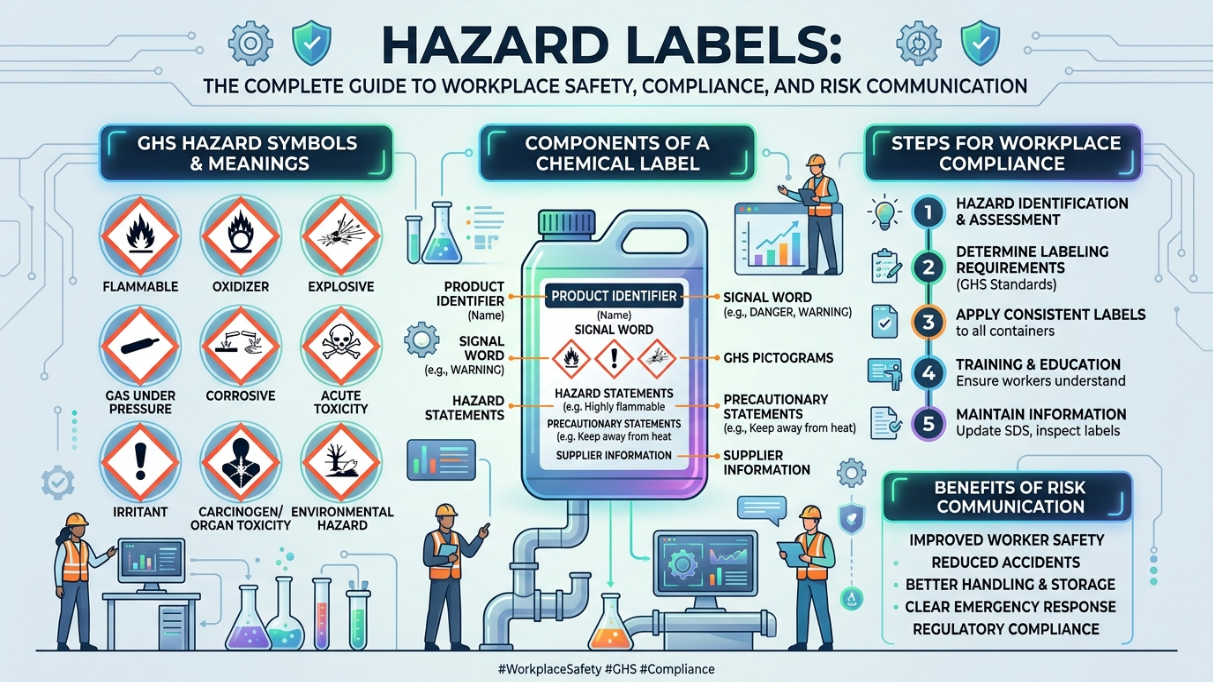
Modern hazard labels combine multiple information layers into a single, easy-to-understand format. Each component has a specific purpose that contributes to rapid hazard recognition and informed decision-making.
The following table summarizes the primary elements commonly found on compliant labels.
| Label Element | Purpose | Practical Benefit |
|---|---|---|
| Product Identifier | Identifies the material or substance | Prevents confusion between products |
| Signal Word | Indicates severity of danger | Quickly communicates risk level |
| Hazard Statement | Explains the specific hazard | Improves awareness before handling |
| Precautionary Statement | Provides safe handling guidance | Encourages proper protective actions |
| Safety Pictograms | Uses internationally recognized symbols | Enables rapid visual recognition |
| Supplier Information | Identifies manufacturer or distributor | Supports traceability and emergency response |
Together, these components allow workers to understand hazards within seconds without relying solely on lengthy documentation.
Understanding Hazard Classification Systems
Different countries have historically used unique hazard communication systems, creating confusion for international businesses. Today, many organizations rely on globally harmonized standards that improve consistency across industries and supply chains.
Modern hazard labels frequently align with internationally recognized classification frameworks that standardize pictograms, warning terminology, and hazard categories. This consistency helps multinational organizations train employees more efficiently while reducing misunderstandings during transportation, storage, and product handling.
Industries That Depend on Hazard Labels
Virtually every industry benefits from effective labeling, although the specific hazards vary considerably. Manufacturing facilities often emphasize chemical exposure, machinery risks, and confined spaces, while healthcare environments focus on biological hazards, pharmaceuticals, and infectious materials.
Construction, agriculture, logistics, mining, laboratories, food production, and energy operations also rely heavily on hazard labels to communicate changing risks. As workplaces become increasingly specialized, accurate labeling continues to play an even greater role in operational safety.
Common Types of Hazard Labels
Safety professionals use different label categories depending on the nature of the hazard being communicated. Selecting the correct label ensures workers immediately recognize the type of danger they may encounter.
Common examples include labels for flammable substances, corrosive chemicals, oxidizers, compressed gases, explosives, toxic materials, environmental hazards, radioactive materials, electrical hazards, laser equipment, biohazards, and high-temperature surfaces. Each serves a distinct purpose while supporting broader workplace risk management strategies.
Best Practices for Using Hazard Labels
Simply applying a label is not enough. Labels must remain visible, durable, legible, and positioned where users naturally look before interacting with equipment or materials.
Organizations achieve the best results by inspecting labels regularly, replacing damaged signage promptly, using weather-resistant materials when necessary, and integrating hazard labels into employee training, inspections, and maintenance procedures. Consistency across all facilities also strengthens recognition and reduces confusion.
Regulatory Compliance and Legal Responsibilities
Employers have a legal responsibility to communicate workplace hazards effectively. Safety regulations in many jurisdictions require organizations to identify hazardous substances, maintain updated safety documentation, and ensure employees understand the risks associated with their work.
Proper hazard labels support compliance by providing standardized information that inspectors, employees, emergency responders, and contractors can easily interpret. Failing to maintain accurate labels can contribute to regulatory violations, operational disruptions, and unnecessary workplace injuries.
Digital Innovation and the Future of Hazard Labels
Technology is transforming workplace safety communication beyond traditional printed labels. QR codes, RFID systems, and digital asset management platforms now provide instant access to expanded safety information using smartphones or industrial scanners.
Future hazard labels will likely integrate real-time updates, multilingual guidance, augmented reality support, and cloud-based safety documentation. These innovations will improve accessibility while helping organizations maintain accurate information across increasingly complex operations.
Common Mistakes Organizations Should Avoid
One frequent mistake is assuming that labels never require updates. Products change, regulations evolve, and labels exposed to sunlight, chemicals, moisture, or abrasion gradually lose their effectiveness.
Another common issue is information overload. Hazard labels should communicate essential safety information quickly rather than overwhelm workers with excessive text. Clear formatting, standardized symbols, and concise language consistently produce better safety outcomes.
Building a Strong Safety Culture Through Hazard Labels
Safety culture develops through thousands of daily decisions rather than occasional training sessions. Visible, accurate communication reinforces safe behaviors every time employees interact with equipment, chemicals, or hazardous environments.
When leadership prioritizes high-quality hazard labels alongside training, inspections, and employee engagement, workers gain confidence in recognizing risks and following established procedures. This proactive approach strengthens trust while supporting long-term operational excellence.
“The best accident is the one prevented before work even begins.”
This principle captures the true value of effective hazard communication. Well-designed labels provide the information people need exactly when they need it, preventing incidents before they occur.
Conclusion
Hazard labels are far more than regulatory requirements—they are one of the most effective tools for preventing workplace injuries and improving operational safety. By clearly identifying risks, supporting informed decision-making, and reinforcing consistent safety practices, they help organizations protect both people and productivity.
As regulations evolve and workplaces become increasingly sophisticated, investing in durable, accurate, and standardized hazard labels will remain a cornerstone of responsible risk management. Organizations that treat labeling as an active part of their safety culture rather than a compliance checkbox create safer environments, stronger employee confidence, and more resilient operations.
FAQ
What are hazard labels?
Hazard labels identify dangerous substances, equipment, or environments using standardized safety information that helps workers recognize and avoid potential risks.
Why are hazard labels important?
Hazard labels improve workplace safety by providing immediate hazard communication, reducing accidents, supporting regulatory compliance, and encouraging safe work practices.
Where should hazard labels be placed?
Hazard labels should be positioned where they are clearly visible before handling hazardous materials, operating equipment, or entering potentially dangerous areas.
How often should hazard labels be replaced?
Hazard labels should be replaced whenever they become faded, damaged, illegible, outdated, or no longer accurately describe the associated hazard.
Do hazard labels help with legal compliance?
Yes. Proper hazard labels are an important part of workplace safety programs and help organizations meet regulatory requirements related to hazard communication and employee protection.
Can hazard labels improve workplace efficiency?
Yes. Clear hazard labels reduce uncertainty, improve decision-making, minimize operational interruptions, and help employees work more confidently while maintaining safe procedures.
Read More: Packing Chips Biodegradable: The Complete Guide to Sustainable Protective Packaging