
Choosing the right flight school is one of the most important decisions for any aspiring pilot. An aviation academy PPL brochure is much more than a promotional document—it serves as a detailed roadmap that explains the training journey, admission requirements, aircraft fleet, instructor qualifications, and career possibilities. Understanding how to evaluate this information helps future pilots make confident, informed decisions before investing in flight training.
Whether you are pursuing aviation as a professional career or fulfilling a lifelong dream of flying, reviewing an aviation academy PPL brochure carefully can reveal the quality, transparency, and professionalism of a training organization. This guide explains every important element you should expect to find while helping you compare academies more effectively.
Understanding an Aviation Academy PPL Brochure
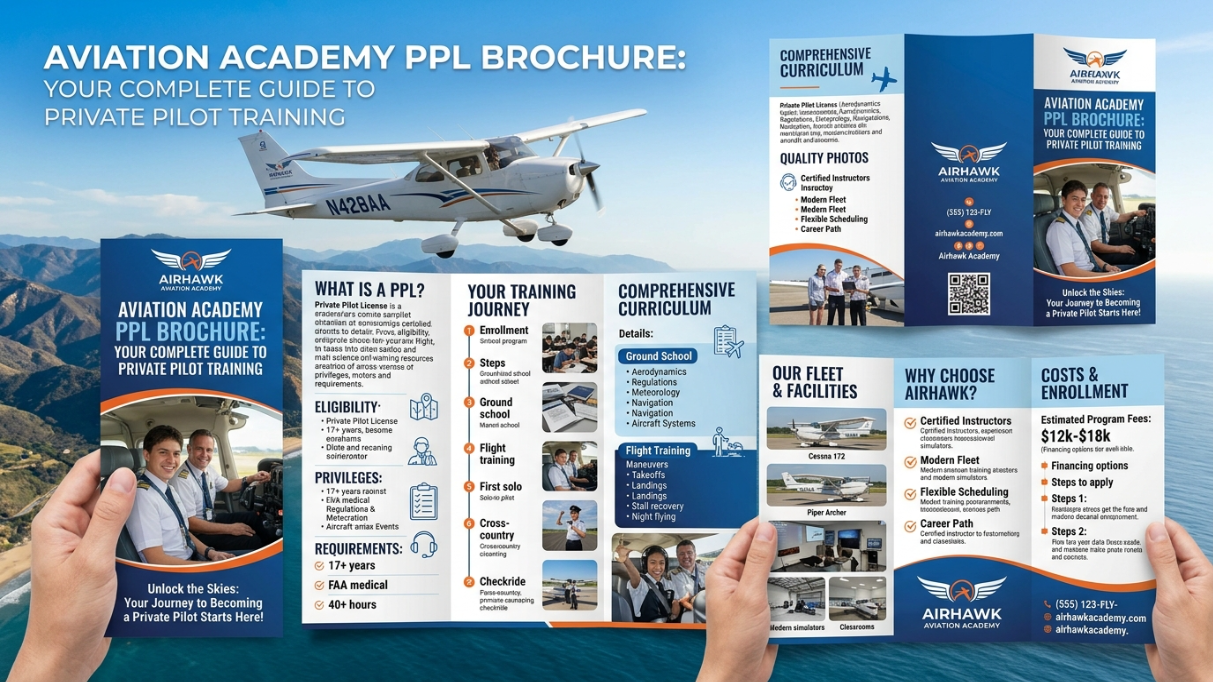
An aviation academy PPL brochure introduces prospective students to a Private Pilot License training program by presenting essential information in a clear and organized format. It typically explains course objectives, eligibility requirements, training duration, aircraft types, instructor experience, facilities, and pricing structures.
Beyond marketing, a well-designed brochure reflects the academy’s educational standards and operational transparency. Schools that clearly explain their curriculum, safety procedures, and student support often demonstrate greater professionalism than those offering only broad promotional claims.
Why the Brochure Matters Before Enrollment
Reviewing an aviation academy PPL brochure before submitting an application allows students to compare multiple schools using consistent criteria rather than relying solely on advertisements or online reviews. It highlights what each academy considers important in its training philosophy.
The brochure also helps families and sponsors understand financial commitments, expected timelines, licensing stages, and additional expenses. This transparency minimizes misunderstandings and allows students to prepare realistically for their aviation journey.
Essential Information Every Brochure Should Include
A high-quality aviation academy PPL brochure should explain admission requirements, medical certification, minimum age, English language expectations, and educational prerequisites. It should also outline both ground school and practical flight instruction in sufficient detail.
Students should also expect information about simulator training, instructor credentials, aircraft maintenance standards, safety policies, examination procedures, student accommodation if available, and ongoing academic support throughout the training program.
Course Structure Explained
Most Private Pilot License programs combine classroom instruction with practical flight experience. An aviation academy PPL brochure usually explains how theoretical knowledge supports practical flight lessons covering navigation, meteorology, aviation regulations, aircraft systems, and flight planning.
Practical lessons normally progress from aircraft familiarization and basic maneuvers to navigation exercises, emergency procedures, solo flights, and cross-country operations. Understanding this progression helps students set realistic expectations before training begins.
Understanding Training Costs
Training expenses vary significantly between flight schools, making financial transparency one of the most valuable parts of an aviation academy PPL brochure. Some academies present a comprehensive package, while others separate tuition, aircraft rental, fuel surcharges, examination fees, and licensing expenses.
Prospective students should carefully review what is included in the quoted price. Lower advertised tuition does not always represent lower overall costs if important services are billed separately throughout the training program.
| Training Component | Typical Description | Why It Matters |
|---|---|---|
| Ground School | Aviation theory classes | Builds foundational knowledge |
| Flight Training | Dual and solo flight hours | Develops practical flying skills |
| Simulator Sessions | Flight simulation practice | Improves procedural proficiency |
| Instructor Fees | Certified instructor guidance | Ensures structured learning |
| Aircraft Rental | Training aircraft usage | Major cost consideration |
| Medical Examination | Aviation medical certification | Required for licensing |
| Examination Fees | Written and practical tests | Necessary for certification |
| Learning Materials | Manuals and training resources | Supports independent study |
Evaluating Aircraft and Training Facilities
An aviation academy PPL brochure should clearly identify the aircraft fleet used during training. Modern, well-maintained aircraft equipped with updated avionics often provide students with a safer and more efficient learning environment.
Training facilities also contribute significantly to learning quality. Modern classrooms, briefing rooms, maintenance hangars, simulators, weather briefing resources, and digital learning platforms demonstrate an academy’s commitment to comprehensive pilot education.
Instructor Qualifications and Student Support
Experienced instructors shape both technical competence and decision-making skills. A reliable aviation academy PPL brochure usually introduces instructor certifications, teaching philosophy, and average instructional experience to help students evaluate educational quality.
Support services also deserve close attention. Academic mentoring, scheduling flexibility, progress evaluations, exam preparation, and career guidance often distinguish outstanding aviation academies from average training providers.
Comparing Multiple Aviation Academies
Comparing several schools becomes easier when each aviation academy PPL brochure presents information consistently. Students should focus on curriculum quality, instructor experience, aircraft availability, scheduling flexibility, safety record, and graduate success rather than price alone.
Creating a comparison checklist helps identify meaningful differences. Factors such as weather conditions, airport traffic, instructor availability, maintenance reliability, and student satisfaction frequently influence training efficiency more than initial tuition costs.
Common Misconceptions About PPL Brochures
Many prospective pilots assume every brochure contains identical information. In reality, each aviation academy PPL brochure reflects the institution’s priorities, operational standards, and educational philosophy, making careful comparison extremely valuable.
Another misconception is that brochures exaggerate capabilities. While promotional language exists, reputable academies usually support their claims with transparent course outlines, facility descriptions, certifications, and clearly defined training procedures.
Using the Brochure to Plan Your Aviation Journey
Reading an aviation academy PPL brochure allows students to build a realistic timeline from enrollment through licensing. Understanding expected milestones reduces uncertainty and helps applicants coordinate finances, work schedules, and personal commitments.
Imagine two students beginning training simultaneously. The one who carefully studied the brochure understands scheduling requirements, study expectations, and flight progression beforehand, making the learning experience smoother and more predictable throughout the course.
Trends Shaping Modern Pilot Training
Today’s aviation academy PPL brochure increasingly highlights digital learning platforms, advanced simulators, safety management systems, environmentally conscious operations, and competency-based instruction. These developments reflect the aviation industry’s ongoing modernization.
Flight academies are also emphasizing flexible scheduling, hybrid theory instruction, electronic flight planning, and enhanced student progress tracking. These innovations improve accessibility while maintaining rigorous professional standards.
Expert Perspective on Choosing a Flight Academy
As aviation educator Rod Machado has observed, “Good pilots are always learning.” That principle begins long before the first flight lesson by carefully evaluating available training information and selecting an academy committed to continuous improvement.
The best aviation academy PPL brochure encourages informed decision-making instead of relying solely on marketing language. Clear communication, transparent expectations, and detailed course information often signal an organization that values long-term student success.
Conclusion
Selecting a flight school requires more than comparing tuition or location. An aviation academy PPL brochure provides valuable insight into training quality, instructional standards, facilities, safety culture, and student support. Carefully reviewing every section helps prospective pilots identify programs that align with their goals and learning preferences.
As aviation continues to evolve, informed students gain a significant advantage by understanding exactly what a training academy offers before enrollment. A detailed aviation academy PPL brochure remains one of the most reliable resources for making a confident, well-informed decision about beginning Private Pilot License training.
FAQ
What is an aviation academy PPL brochure?
An aviation academy PPL brochure is an informational document explaining a flight school’s Private Pilot License program, including course content, admission requirements, training facilities, pricing, and instructor information.
What should I look for in an aviation academy PPL brochure?
Focus on curriculum details, aircraft fleet, instructor qualifications, safety standards, training duration, costs, licensing requirements, and available student support to evaluate overall program quality.
Does every aviation academy PPL brochure include pricing?
Most academies provide pricing estimates, but some separate additional expenses such as examination fees, aircraft rental, fuel charges, or licensing costs, making careful review essential.
Can I compare different schools using an aviation academy PPL brochure?
Yes. Comparing each aviation academy PPL brochure allows prospective students to evaluate training quality, facilities, scheduling flexibility, instructor experience, and overall value before choosing an academy.
Why is an aviation academy PPL brochure important before enrollment?
An aviation academy PPL brochure helps students understand course expectations, financial commitments, training progression, and academy standards, making it easier to select the right flight training provider with confidence.
Read More: WAEC 2025 Auto Mechanics Exam Strengths: Complete Guide to Topics, Skills, and Preparation