
An annual development programme is one of the most important tools governments use to transform long-term development goals into measurable annual achievements. It brings together priority projects, allocates financial resources, and establishes implementation timelines that support national progress across sectors such as infrastructure, education, healthcare, agriculture, energy, and technology.
Whether the objective is improving transportation networks, expanding healthcare access, or strengthening economic resilience, a well-designed annual development programme ensures that public investment delivers maximum value. By aligning budgets with strategic priorities, governments can improve transparency, accountability, and long-term sustainability while responding to changing economic and social needs.
What Is an Annual Development Programme?
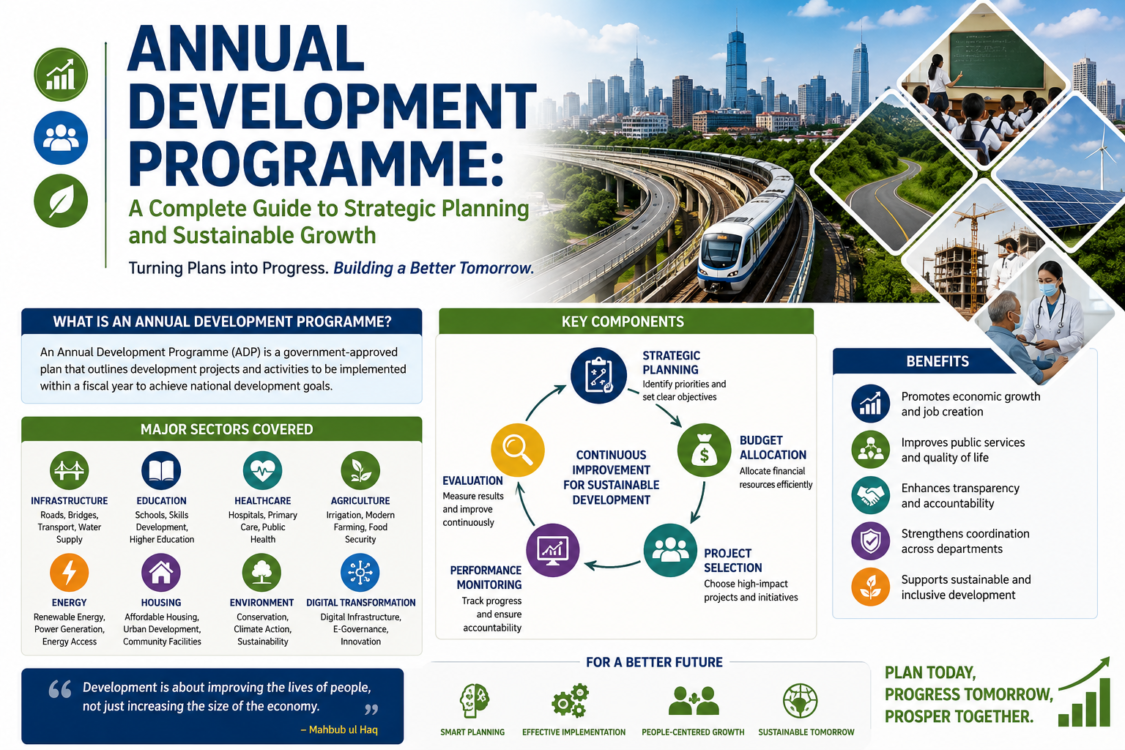
An annual development programme is a government-approved investment plan that outlines the development projects to be implemented within a fiscal year. It converts national development strategies into actionable initiatives with defined budgets, timelines, and expected outcomes.
The programme typically includes infrastructure projects, social development initiatives, economic reforms, environmental protection efforts, and regional development plans. By coordinating these activities, governments can allocate resources more efficiently and monitor progress throughout the year.
Why the Annual Development Programme Matters
Economic development depends on careful planning rather than isolated projects. A comprehensive annual development programme helps governments prioritize investments that generate long-term social and economic benefits while avoiding unnecessary duplication of resources.
Citizens also benefit from greater transparency because development priorities become publicly visible. Investors, businesses, and international partners gain confidence when governments consistently implement clearly defined development plans.
Key Components of an Annual Development Programme
A successful programme combines strategic planning with practical execution. It identifies priority sectors, estimates financial requirements, assigns responsible agencies, and establishes measurable performance indicators.
Risk management is equally important. Economic uncertainty, inflation, natural disasters, or administrative delays can affect implementation, making continuous monitoring and adaptive planning essential throughout the fiscal year.
Major Sectors Covered
Most development programmes focus on sectors that create long-term national value. Infrastructure projects often include roads, bridges, railways, airports, and water systems that improve connectivity and economic productivity.
Social sectors receive significant investment through education, healthcare, housing, digital transformation, agriculture, environmental conservation, and renewable energy. These investments improve quality of life while supporting sustainable economic growth.
Benefits of an Annual Development Programme
One of the greatest advantages of an annual development programme is improved coordination between government ministries and agencies. Shared objectives reduce duplication and encourage more effective use of public funds.
Another benefit is stronger accountability. Clearly defined budgets, milestones, and performance indicators make it easier to evaluate whether development projects are achieving their intended outcomes.
Common Challenges
Even well-designed programmes face implementation challenges. Funding shortages, procurement delays, political changes, and inflation can slow project execution and increase overall costs.
Strong governance, transparent procurement systems, digital monitoring platforms, and regular performance reviews help reduce these risks and improve project completion rates.
Comparison of Key Elements
| Component | Purpose | Expected Outcome |
|---|---|---|
| Strategic Planning | Define national priorities | Clear development direction |
| Budget Allocation | Finance priority projects | Efficient resource use |
| Project Selection | Focus on high-impact initiatives | Better public value |
| Performance Monitoring | Track implementation | Greater accountability |
| Evaluation | Measure results | Continuous improvement |
Best Practices for Effective Implementation
Successful governments treat an annual development programme as a living management framework rather than a static document. Regular progress reviews allow agencies to address emerging challenges before they become major obstacles.
Digital project management systems, open data initiatives, stakeholder consultation, and evidence-based policymaking further strengthen implementation while increasing public confidence in government performance.
“Development is about improving the lives of people, not just increasing the size of the economy.”
This principle reminds policymakers that successful development should balance economic growth with social inclusion, environmental sustainability, and long-term resilience.
Future Trends
Modern development planning increasingly incorporates digital transformation, climate resilience, smart infrastructure, renewable energy, and data-driven decision-making. These priorities help governments respond to rapidly changing economic conditions.
Artificial intelligence, geographic information systems, and real-time analytics are also improving how development projects are planned, monitored, and evaluated, making future programmes more efficient and transparent.
Conclusion
An annual development programme serves as the operational foundation for national progress by translating strategic goals into measurable actions. Through careful planning, responsible budgeting, and effective implementation, governments can improve infrastructure, strengthen public services, encourage investment, and create sustainable economic growth.
As global challenges continue to evolve, the importance of a flexible, transparent, and results-oriented annual development programme will only increase. Countries that continuously improve their planning processes are better positioned to achieve inclusive development and long-term prosperity.
FAQ
What is an annual development programme?
An annual development programme is a government plan that identifies priority development projects, allocates funding, and establishes implementation targets for a fiscal year.
Why is an annual development programme important?
An annual development programme ensures that public resources are directed toward high-priority projects that support economic growth, infrastructure, and social development.
Who prepares an annual development programme?
Government planning ministries, finance departments, sectoral agencies, and relevant stakeholders typically collaborate to prepare an annual development programme.
How is an annual development programme funded?
Funding generally comes from government revenues, development partners, public borrowing, grants, and other approved financing sources.
How is the success of an annual development programme measured?
Success is measured through project completion rates, budget utilization, economic impact, service delivery improvements, and achievement of predefined performance indicators.
Read More: Calendar for Miami Dade Public Schools: Complete Guide to the School Year